

Brazilian Butt Lift in Albany NY
Brazilian Butt Lift in Albany NY
Buttock Shape, Waist Definition, And Body Proportion Using Your Own Fat.
A Brazilian Butt Lift, often called a BBL, uses liposuction and fat transfer to improve buttock shape, projection, waist definition, and overall body proportion. The goal is not simply to make the buttocks larger — it is to create a safer, balanced, natural-looking contour that fits your frame.
Patients with enough donor fat who want improved buttock shape and body proportion.
Waist-to-hip balance, lower back contour, buttock shape, and selected volume concerns.
Liposuction of the waist, flanks, lower back, abdomen, thighs, or other donor areas.
BBL is fat transfer. Liposuction alone may be better when shape improvement does not require added volume.
Real Patient Results
What this Brazilian Butt Lift before-and-after shows.
BBL results are about more than buttock size. The most important changes are often the relationship between the waist, lower back, hips, and buttocks. A well-planned BBL uses liposuction and fat transfer together to improve contour and proportion.
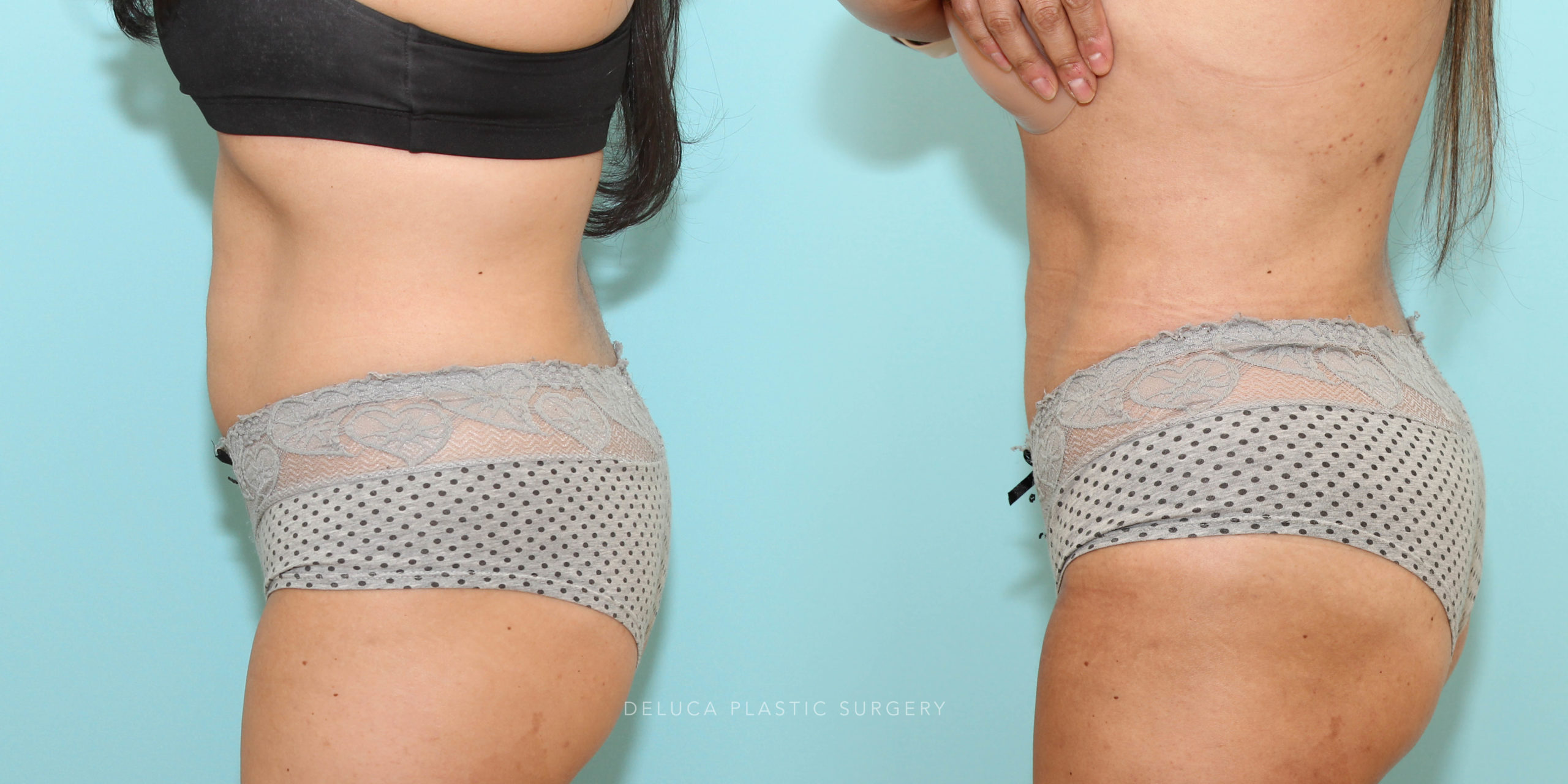
Waist Definition
Liposuction can reduce fullness around the waist, flanks, and lower back to improve the surrounding silhouette.
Buttock Shape
Fat transfer can improve selected areas of fullness, roundness, projection, or contour depending on anatomy.
Proportion
The goal is a balanced waist-to-hip relationship that fits the patient’s natural frame.
What to notice:
The result is shaped by both the liposuction plan and the fat transfer plan. The safest, most natural BBL is often about proportion — not maximum volume.
Your Options
Fat transfer BBL, liposuction-only contouring, or staged planning.
Brazilian Butt Lift surgery is not one-size-fits-all. The right plan may involve fat transfer, liposuction-only contouring, staged surgery, or a different approach entirely.
Fat Transfer BBL
The classic approach uses liposuction to harvest fat and transfer it to the buttocks for improved shape and fullness.
Liposuction-Only Contouring
For some patients, waist, flank, and lower back liposuction creates enough improvement without adding volume.
Staged Fat Transfer
When more volume is desired, staging may be safer and more realistic than attempting a major change in one operation.
Alternative Plans
Very thin patients, patients with loose skin, or patients seeking extreme volume may need another approach or may not be ideal candidates.
Typical Investment Range
How much does a Brazilian Butt Lift cost?
The current estimated total surgical cost is $7,960–$12,760+. The final quote depends on the liposuction areas, donor-fat plan, fat-transfer complexity, anesthesia, and whether another procedure is included.
Estimated Total Surgical Cost
$7,960–$12,760+
Published Financing Example
$180–$292.05/month for 60 months*
Available only to qualified patients under independent lender terms.
Published prices are planning estimates, not binding quotes. Your written estimate controls and may vary with anatomy, procedure extent, implants or devices, and other individualized needs. Financing is subject to approval and independent lender terms.
Recovery Timeline
What to expect after Brazilian Butt Lift surgery.
Recovery after a BBL involves healing from both liposuction and fat transfer. Bruising, swelling, soreness, and tightness are common. Patients typically wear compression to support the liposuction areas and must protect the transferred fat from pressure during early healing.
Swelling, bruising, soreness, compression garment use, and limited sitting or pressure on the buttocks.
Gradual improvement in mobility and swelling while continuing to protect the transferred fat from pressure.
Many patients begin returning toward more normal activity depending on healing and surgeon guidance.
Swelling settles and the surviving transferred fat becomes more stable.
Honest Guidance
When a Brazilian Butt Lift may not be the right choice.
A BBL can be powerful for the right patient, but it is not the answer for every contour concern. Good planning means being honest about anatomy, donor fat, safety, recovery restrictions, and whether a more conservative or staged plan makes sense.
Who may not be a good candidate?
Very thin patients, patients with unstable weight, patients seeking extreme volume, active nicotine users, or patients who cannot follow sitting and pressure restrictions may not be ideal candidates.
Tradeoffs to consider
BBL involves liposuction recovery, swelling, bruising, fat absorption, pressure restrictions, possible asymmetry, and the possibility of staged or revision surgery.
When surgery may not be worth it
If liposuction alone can create enough improvement, if donor fat is limited, or if the desired result exceeds what can be done safely, a BBL may not be the best choice.
Good surgery sometimes means saying no.
If a BBL is not the best fit, a different procedure, staged plan, or delaying surgery may be the safer recommendation.
Risk Transparency
What can go wrong — and how we plan for it.
Every surgical procedure carries risk. Brazilian Butt Lift surgery also has specific safety considerations related to fat transfer, liposuction, positioning, and recovery. The goal is not to ignore risk, but to reduce it through patient selection, planning, technique, and follow-up.
- Fat absorption: Some transferred fat may not survive, and final volume can be less than early swelling suggests.
- Contour irregularity: Unevenness can occur in liposuction or fat transfer areas as swelling resolves.
- Asymmetry: Some asymmetry is normal, and revision may occasionally be needed.
- Fluid collection or delayed healing: Compression, activity restrictions, and follow-up help monitor recovery.
- Safety concerns: BBL planning should prioritize safe fat placement, realistic volume, operative time, and patient selection.
- Recovery limitations: Sitting and direct pressure restrictions are important during early healing.
Related Procedures
Other body-contouring options commonly compared with BBL.
Patients considering Brazilian Butt Lift surgery often compare it with other body contouring options. The best plan depends on whether the main concern is volume, waist definition, loose skin, abdominal contour, or overall body proportion.
Liposuction
May improve waist, flank, back, and thigh contour with or without fat transfer.
Learn about liposuction →Tummy Tuck
May be better when loose abdominal skin or muscle separation is the dominant concern.
Learn about tummy tuck →Mommy Makeover
Combines procedures for patients seeking broader body restoration after pregnancy or weight change.
Learn about mommy makeover →Clear, Honest Guidance
Brazilian Butt Lift FAQ
What is a Brazilian Butt Lift?
A Brazilian Butt Lift is a cosmetic surgery that combines liposuction with fat grafting. Fat is removed from selected donor areas, processed, and transferred to the buttocks to improve shape, fullness, and contour.
How much does a Brazilian Butt Lift cost?
The current estimated total surgical cost for a Brazilian Butt Lift is $7,960–$12,760+. Total cost may also include anesthesia, facility fees, garments, prescriptions, lab work, compression, or other procedure-specific needs. Visit the pricing page for current guidance.
How is BBL different from liposuction?
Liposuction removes fat to improve contour. A BBL uses liposuction to harvest fat and then transfers that fat to the buttocks. Some patients only need liposuction, while others benefit from fat transfer.
How long does Brazilian Butt Lift recovery take?
Most patients need at least one to two weeks of focused recovery, with continued activity and sitting restrictions after that. Exercise and unrestricted activity usually return gradually based on healing and surgeon guidance.
How much transferred fat survives after a BBL?
Fat survival varies. Some of the transferred fat is naturally absorbed by the body. The amount that survives depends on surgical technique, healing, pressure avoidance, circulation, and individual biology.
What if I do not have enough fat for a BBL?
If there is not enough donor fat, other options may be discussed. In some patients, liposuction-only contouring, weight stabilization, or a different surgical plan may be more appropriate.
Will I be able to sit after surgery?
Patients are usually instructed to avoid direct pressure on the buttocks during early recovery. Special positioning, pillows, and activity modifications may be needed.
Can a BBL fix loose skin?
A BBL can improve shape and volume, but it does not reliably tighten significant loose skin. Patients with substantial skin laxity may need a different body contouring approach.

